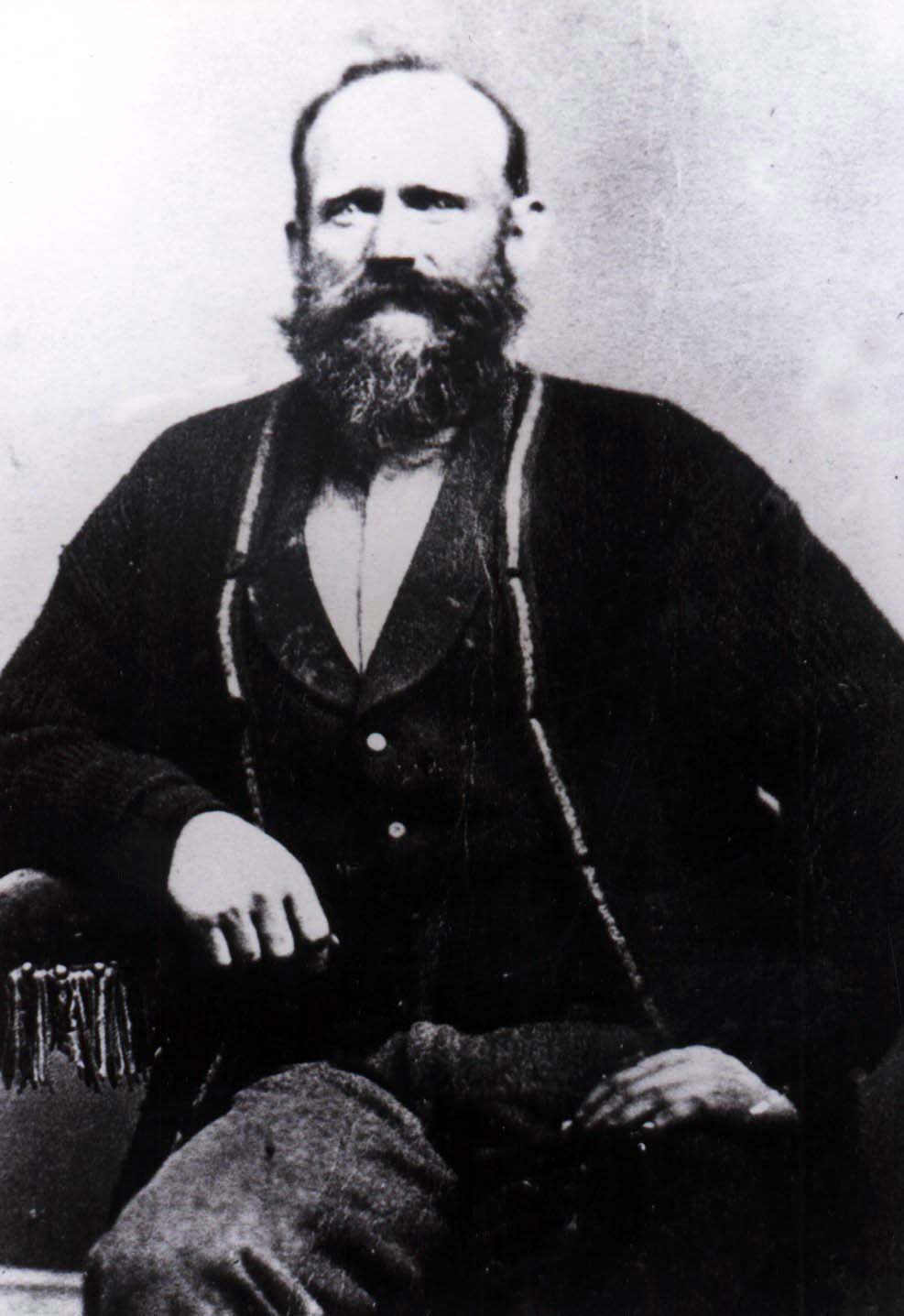
by George E. Davidson
Capitol Reef National Park, Torrey, Utah
"Eph" Hanks settled along a remote area of Pleasant Creek in 1882. He had been a frontier mail carrier, a scout for Mormon Wagon trains moving into the valley of the Great Salt Lake thirty years earlier, and had served as a solider in the "Mormon Battalion." Hanks was thought by some to have been a bodyguard for the oft-threatened Brigham Young and was --it was said--no man to be toyed with. He had been a polygamist himself, but according to his family biographer had divorced all of his wives and remarried the youngest, Thisbe, before moving to the fold country. Hanks and his family worked hard and, in a few short years, a house and farm outbuildings had been built and irrigation had made his desert homestead at Floral Ranch bloom.
The aging scout also operated an "underground railroad" at Floral Ranch for fugitive polygamists, much like some midwesterners and easterners of pre-Civil War America had sheltered, protected, and provided a "railroad" to freedom for thousands of fugitive black slaves. Many a Wayne County polygamist with an arrest warrant outstanding found shelter with Eph Hanks. When deputy U.S. marshals came into the county, sympathetic Mormons would get word to Hanks. Sometimes his son, Walter E. Hanks, would make a dangerous, short-cut ride on horseback down Pleasant Creek from Loa to arrive at the ranch before the slow-moving marshals. According to his biographer, Hanks was never caught at his game. When the marshals arrived, there was never a fugitive to be found; they were well hidden in the back country. Hanks was much respected by his neighbors and was eventually made a "patriarch" of the Mormon Church, a high honor. He died of "congestion of the brain" in 1896.
As the decade of the 1880s ended so did the arrest and prosecution of Mormon polgamists, even though the hated "Edmunds laws" again polygamy were still on the books.